Is Reseller Hosting Profitable? Pros, Cons & Potential
Is reseller hosting profitable for beginners and small businesses? Discover how reseller hosting works, what affects profit margins, the advantages and disadvantages, realistic financial examples, and practical steps for building a sustainable web hosting business.

Starting an online business has become increasingly accessible, especially for entrepreneurs who want to build recurring revenue without investing heavily in physical infrastructure. One opportunity that continues to attract attention is reseller hosting. It allows individuals, freelancers, agencies, and small companies to offer website hosting services under their own brand while using infrastructure supplied by an established hosting provider. However, before entering this industry, one important question deserves careful consideration: is reseller hosting profitable? The answer depends on several factors, including startup costs, customer acquisition, pricing, operational efficiency, technical support, and long-term customer retention. Reseller hosting can generate sustainable revenue, but it is not automatically profitable simply because hosting packages can be purchased at wholesale prices.
A reseller hosting business works by purchasing hosting resources from a provider and dividing those resources into smaller hosting packages for individual customers. Instead of purchasing physical servers, maintaining data centers, or managing complex networking equipment, the reseller focuses primarily on branding, marketing, sales, customer relationships, and service delivery. This business structure can reduce the financial and technical barriers associated with launching a traditional hosting company. For example, a freelance website developer may already manage websites for several clients. By offering hosting alongside development and maintenance services, the developer can create an additional source of recurring revenue while providing clients with a convenient combination of services.
The profitability of reseller hosting becomes clearer when revenue and expenses are evaluated together. Suppose an entrepreneur purchases a reseller hosting package for $30 per month and sells hosting subscriptions to 20 customers at $5 per month. The resulting monthly revenue would be $100, leaving $70 before accounting for payment processing, customer support, advertising, taxes, software, refunds, and other operating expenses. Although the calculation appears attractive, the actual profit depends on how much the reseller spends acquiring and supporting customers. If advertising and operational costs exceed the remaining revenue, the business may initially operate at a loss. This example illustrates why successful hosting resellers need to understand financial planning rather than focusing exclusively on the difference between wholesale and retail prices.
Customer retention also plays a major role in determining long-term profitability. Hosting services are commonly sold through monthly, quarterly, or annual subscriptions, creating opportunities for recurring revenue. When customers receive dependable performance, responsive support, transparent pricing, and consistent service, they may continue renewing their subscriptions. However, recurring billing does not guarantee recurring profit. Customers can cancel, migrate to competing providers, or request refunds when expectations are not met. A hosting reseller must therefore invest in customer satisfaction, technical reliability, and clear communication to build a business that remains financially sustainable.
Another important consideration is market competition. The web hosting industry includes established international companies, regional providers, specialized hosting businesses, and independent resellers. Competing exclusively on the lowest price can create financial pressure, especially when customer support requirements increase. A more practical approach is to identify a specific audience and offer services that solve its problems. Website developers, small businesses, online stores, bloggers, and local organizations may value different features. Understanding these differences helps resellers create packages that offer meaningful value instead of simply copying competitors.
This guide explains the financial potential of reseller hosting, its advantages and disadvantages, realistic business opportunities, and the practical steps required to launch and operate a hosting company. It also examines common mistakes, essential financial metrics, customer acquisition strategies, and frequently asked questions. Whether you are a beginner exploring online business opportunities or an experienced freelancer considering additional services, understanding these fundamentals will help you evaluate whether reseller hosting matches your resources, skills, and long-term business objectives.
Is Reseller Hosting Profitable in 2026?
Reseller hosting can be profitable in 2026 when it is operated with realistic pricing, controlled expenses, reliable infrastructure, and a clear customer acquisition strategy. The business model offers an opportunity to earn revenue from hosting subscriptions without purchasing and maintaining dedicated physical servers. However, profitability depends on the relationship between revenue, costs, customer retention, and service quality. Entrepreneurs who understand these variables are better positioned to develop a sustainable business than those who assume that purchasing an inexpensive reseller package automatically creates a profitable company.
The primary financial advantage of reseller hosting is its relatively accessible starting cost. Traditional hosting providers may need substantial investment in servers, networking equipment, backup systems, monitoring tools, infrastructure security, and technical personnel. A reseller typically pays a recurring subscription to an upstream provider, which manages much of the underlying infrastructure. This arrangement allows entrepreneurs to test demand before committing to larger operational expenses. Nevertheless, reseller hosting still requires financial planning. Domain registration, branding, billing software, payment gateway charges, technical support, and marketing can significantly affect the overall cost of operating the business.
Recurring subscriptions provide another potential advantage. Unlike a business that depends entirely on one-time purchases, hosting companies can receive payments from customers who renew their services. For example, a reseller serving 50 customers at an average of $6 per month would generate $300 in monthly recurring revenue, assuming every customer pays and remains active. If the business spends $100 on hosting resources and another $80 on operating expenses, its illustrative monthly operating profit would be $120 before applicable taxes and any uncounted costs. These figures are hypothetical rather than guaranteed earnings. Actual results depend on package prices, utilization, market conditions, customer behavior, and the reseller's cost structure.
Profitability also improves when resellers offer additional services that customers genuinely need. Website migration, website maintenance, domain registration, email configuration, backup assistance, security monitoring, and technical consultations can create additional revenue opportunities. A web development agency, for example, might offer hosting as part of a broader website management package. Customers may appreciate having one service provider responsible for several related technical requirements. However, these additional services should be priced according to the work involved. Offering unlimited technical assistance without considering labor costs can reduce profit even when subscription revenue appears healthy.
Competition remains one of the largest challenges for new hosting resellers. Established hosting companies often benefit from brand recognition, large marketing budgets, and economies of scale. Smaller resellers may struggle to match their promotional pricing or extensive infrastructure offerings. Instead of competing directly with every major provider, a new reseller can focus on a narrower market. Local businesses, independent professionals, website designers, and organizations requiring personalized support may prefer a smaller hosting provider that understands their needs. Specialized positioning can help justify reasonable pricing and reduce dependence on aggressive discounts.
A successful reseller hosting business must also manage technical and operational risks. Server downtime, resource limitations, malware incidents, payment disputes, and delayed support responses can affect customer satisfaction and retention. Choosing a dependable upstream provider and establishing clear support procedures can reduce these risks, although they cannot eliminate them completely. Resellers should carefully examine service agreements, resource policies, backup arrangements, security responsibilities, and escalation procedures before committing to a hosting package.
Ultimately, the question is not simply whether reseller hosting can generate profit. The more useful question is whether a particular entrepreneur can attract enough customers, charge sustainable prices, manage expenses, and consistently deliver valuable services. With disciplined operations and a realistic growth strategy, reseller hosting can become a viable small business or an additional revenue stream for an existing digital services company.
How the Reseller Hosting Business Model Works
Understanding the reseller hosting business model is essential before evaluating its financial potential. At its core, reseller hosting allows a business to purchase hosting resources from an established provider and offer those resources to its own customers through individually configured hosting accounts. The reseller manages customer relationships, pricing, branding, billing, and often first-line technical support, while the upstream provider manages the underlying hosting infrastructure according to its service agreement. This division of responsibilities makes reseller hosting attractive to entrepreneurs who want to enter the hosting industry without immediately becoming server administrators or infrastructure operators.
The process begins when an entrepreneur selects a reseller hosting package from a hosting provider. Packages may include allocated storage, bandwidth, account limits, processing resources, email functionality, database access, and account management tools. Some providers also offer white-label features that allow resellers to present hosting services under their own business identity. Before selecting a package, the reseller should examine both advertised features and practical restrictions. Terms such as unlimited bandwidth or unlimited accounts may still be subject to acceptable-use policies, processing limits, storage restrictions, or other technical conditions. Understanding these limitations helps prevent the creation of customer packages that the underlying infrastructure cannot reliably support.
After obtaining a reseller package, the business owner creates hosting plans for customers. These plans can be organized according to storage capacity, website requirements, email accounts, resource allocations, backup options, and support levels. For example, a reseller might offer an entry-level package for personal websites, a business package for growing companies, and a higher-resource package for websites with more demanding requirements. Each plan should be priced to cover its expected resource consumption and associated operating expenses. Packages should also include clear descriptions of what customers receive, what limitations apply, and which services require additional payment.
Account management tools are important to this workflow. Depending on the provider's technology, resellers may use WHM, a cPanel reseller environment, or another hosting management interface. These tools can support account creation, package assignments, resource allocation, and certain administrative tasks. Billing systems may handle invoices, subscription renewals, payment reminders, and account provisioning when compatible automation is available. Automation can reduce repetitive work, but it should be configured carefully. Incorrect billing settings, automated suspension rules, or package allocations can create customer service problems if they are not properly tested.
Customer acquisition is the next major component. A reseller needs a professional website explaining its hosting packages, terms, support channels, and payment options. Customers may arrive through search engines, referrals, partnerships, social media, local business networks, or existing website development relationships. The reseller is responsible for explaining its offerings accurately and helping customers select appropriate services. Once a customer purchases a package, the reseller provisions the hosting account, provides access details securely, and assists with any included setup or migration services.
The upstream provider and reseller usually have different support responsibilities. The provider may handle server hardware, core network availability, and infrastructure-level issues, while the reseller manages customer questions, website configuration assistance, billing, and other services included in its packages. The exact division depends on the provider's contract. Resellers should not assume that every technical problem will be resolved directly by the upstream company. They need sufficient technical knowledge to identify issues, communicate with customers, and escalate infrastructure problems when necessary.
The business becomes financially sustainable when customer revenue consistently exceeds the cost of hosting resources and other operations. As the customer base grows, the reseller may need to upgrade its package, improve support capacity, introduce automation, or adjust pricing. Growth should therefore be measured not only by the number of hosting accounts sold but also by resource usage, customer satisfaction, retention, and net profitability.
Startup Costs, Profit Margins, and Financial Planning
Financial planning is one of the most important steps in building a reseller hosting business. Although reseller hosting generally requires less infrastructure investment than operating independent servers, it still involves several recurring and occasional expenses. Entrepreneurs who calculate only the reseller package subscription may underestimate their actual operating costs. A sustainable business plan should account for hosting resources, domain registration, website development, billing tools, payment processing, customer support, marketing, refunds, and applicable taxes. Understanding these costs makes it easier to set realistic prices and estimate how many paying customers are needed before the business becomes profitable.
The reseller hosting package is usually the main infrastructure expense. Pricing varies according to the provider, resource allocations, account limits, support arrangements, and included software. Some businesses begin with a smaller package and upgrade as customer demand increases. This approach can reduce unnecessary expenses during the early stages. However, selecting the cheapest available package without evaluating reliability, performance, and technical support may create larger costs later. Frequent service problems can increase support workloads, damage customer trust, and lead to cancellations. A slightly higher infrastructure cost may be reasonable when it provides measurable operational benefits.
A practical financial model should separate fixed expenses from variable expenses. Fixed expenses are costs that remain relatively stable over a particular period, such as the reseller package subscription, business website hosting, and certain software licenses. Variable expenses change with customer activity and may include payment processing fees, additional storage, premium backups, outsourced support, and customer acquisition costs. Some expenses are mixed, meaning they remain stable until usage reaches a threshold that requires an upgrade. Understanding these categories helps entrepreneurs predict how profitability may change as the business grows.
Consider a hypothetical reseller business with a $40 monthly hosting subscription, $20 in software and administrative expenses, and $30 allocated to ongoing marketing and support overhead. Its total monthly operating cost would be $90 before customer-specific payment fees, additional labor, and taxes. If each customer pays $6 per month and the reseller incurs $0.50 in variable costs per customer, each subscription contributes $5.50 toward fixed expenses and profit. Dividing $90 by $5.50 produces approximately 16.36, meaning the business would need at least 17 active paying customers to cover the modeled monthly expenses. This calculation is a simplified break-even estimate, not a guarantee of financial success.
Interactive reseller hosting profit calculator
Profit margins should be evaluated carefully because different calculations describe different aspects of performance. Gross profit generally measures revenue after the direct costs of delivering a service, while operating profit accounts for additional business expenses. A reseller might report a high margin when comparing hosting revenue with the upstream subscription alone, but the margin could become much smaller after advertising, support, software, and transaction expenses are included. Business owners should maintain accurate financial records and review these metrics regularly rather than relying on assumptions.
Customer acquisition costs are particularly important. If a business spends $30 to acquire a customer who pays $6 per month, it must retain that customer long enough to recover the acquisition expense and generate a return. The relevant calculation uses the customer's contribution after variable costs, not total subscription revenue. Annual subscriptions may improve short-term cash flow, but they also create an obligation to deliver services throughout the paid period. Revenue received in advance should not automatically be treated as unrestricted profit.
Financial planning becomes more effective when combined with realistic growth scenarios. A reseller can estimate conservative, moderate, and optimistic customer acquisition rates while considering cancellations and infrastructure upgrades. Maintaining a cash reserve for unexpected costs can help the business continue operating during slower sales periods. Profitability is therefore best understood as an ongoing financial management process rather than a single calculation performed before launch.
Major Advantages of Starting a Reseller Hosting Business
One of the strongest advantages of reseller hosting is that entrepreneurs can enter the web hosting market without owning expensive infrastructure. Purchasing servers, maintaining redundant network connections, arranging physical security, and operating a data center require significant financial and technical resources. Reseller hosting transfers many infrastructure responsibilities to an established provider, allowing the reseller to focus on business development and customer service. This can be particularly useful for freelancers, website development agencies, digital marketing companies, and entrepreneurs who already understand the needs of website owners but do not want to operate independent server environments.
Another advantage is the opportunity to develop a recognizable hosting brand. White-label reseller services may allow businesses to use their own website, company identity, customer communications, and branded hosting packages. This flexibility helps entrepreneurs establish a direct relationship with customers rather than acting only as referral partners for another hosting company. A strong brand can communicate a clear service promise, such as beginner-friendly website hosting, specialized support for local businesses, or managed hosting assistance for agency clients. Branding alone does not create customer loyalty, but it can support a consistent customer experience when combined with dependable service delivery.
Recurring revenue is also an important benefit. Hosting customers generally need continued service to keep their websites available, which creates opportunities for subscription renewals. Compared with businesses that depend entirely on individual project payments, a reseller hosting business can gradually build a more predictable revenue base. Predictability improves when customers renew consistently, billing processes are organized, and cancellations remain manageable. However, subscription revenue should never be mistaken for guaranteed income. Customers must continue receiving sufficient value to justify their payments.
Reseller hosting can also complement existing digital services. A web designer who creates websites for small businesses may offer hosting as part of a complete service package. Similarly, a digital agency can combine hosting with website maintenance, updates, backups, and technical assistance. This approach can simplify service management for customers who prefer dealing with one provider. It can also create additional revenue opportunities without requiring the business to attract an entirely separate audience. For many beginners, selling hosting to existing clients may be more practical than competing immediately for customers through expensive advertising campaigns.
Scalability is another potential benefit. A reseller can begin with a limited number of accounts and expand its resource allocation as demand increases. Depending on the upstream provider, this may involve upgrading to a larger reseller package, purchasing additional resources, or eventually moving selected customers to VPS or dedicated hosting solutions. Gradual expansion can help entrepreneurs control costs while learning about real customer requirements. Nevertheless, scalability depends on the provider's upgrade options, migration support, technical limitations, and contractual terms. Businesses should evaluate these factors before assuming that growth will always be seamless.
Operational tools can further improve efficiency. Hosting management interfaces, billing platforms, automated invoicing, and monitoring systems may reduce the amount of repetitive administrative work required to serve customers. Automation can be particularly valuable when the number of accounts grows, but it should support rather than replace responsible customer service. Businesses still need to respond to technical issues, investigate billing problems, and communicate clearly during disruptions.
Finally, reseller hosting offers opportunities for specialization. A business may focus on WordPress websites, small online stores, portfolio websites, regional businesses, or customers who require hands-on setup assistance. Specialization helps entrepreneurs create relevant packages and marketing messages. Instead of trying to serve every possible hosting customer, a focused reseller can build expertise within a manageable market. When supported by realistic pricing and reliable service, these advantages make reseller hosting a potentially attractive business model.
Disadvantages, Risks, and Challenges of Reseller Hosting
Although reseller hosting offers several attractive benefits, it also introduces risks that entrepreneurs should understand before launching a business. One major disadvantage is limited control over the underlying infrastructure. A reseller generally does not own the physical servers or control every aspect of the operating environment. Server hardware, core networking, virtualization arrangements, system-level maintenance, and certain security responsibilities remain with the upstream provider. This arrangement reduces infrastructure management requirements, but it also creates dependency. If the provider experiences a service disruption, the reseller's customers may be affected even when the reseller has managed its own responsibilities correctly.
Technical performance is another important challenge. Websites can experience slow loading times or resource limitations when hosting environments are poorly configured, oversubscribed, or unsuitable for particular workloads. Resellers must understand how CPU, memory, storage performance, database usage, and concurrent processes affect website performance. Selling packages without considering these limitations can create customer dissatisfaction. A hosting plan that works well for a simple informational website may not be suitable for a busy online store or a resource-intensive application. Resellers should therefore avoid promising performance levels that cannot be supported by the actual infrastructure and service agreement.
Customer support can become expensive and time-consuming. Many beginners assume that hosting reselling requires little work because the upstream provider manages the server. In practice, customers may need help with domain configuration, email delivery, SSL certificates, website migrations, content management systems, databases, backups, and troubleshooting. Even when the reseller cannot directly resolve an infrastructure issue, customers will generally expect timely communication. A business serving customers across different time zones may also face support requests outside normal working hours. Without clear support boundaries and efficient procedures, the workload can increase faster than revenue.
Market competition creates additional pressure. Large hosting companies may advertise discounted introductory packages, bundled domain registrations, extensive marketing promotions, and specialized hosting features. Small resellers may find it difficult to compete through pricing alone. Excessive discounts can attract customers who are highly sensitive to price while leaving insufficient revenue to cover support and operational expenses. A more sustainable strategy is to compete through relevant services, transparent pricing, reliable communication, and a clearly defined customer segment.
Security and data protection introduce serious responsibilities. Hosting environments may contain business websites, customer information, email accounts, databases, and other sensitive data. Resellers need to understand their contractual obligations, applicable privacy requirements, account access controls, and incident response responsibilities. They should use secure authentication, restrict administrative access, and establish backup and recovery procedures appropriate to their services. It is also important to understand which security measures are handled by the upstream provider and which remain the reseller's responsibility. No hosting arrangement can eliminate every cybersecurity risk.
Financial uncertainty is another challenge. A reseller may need to pay its provider every month even when customer payments are delayed or sales are slow. Annual customer subscriptions can improve cash flow temporarily, but the business remains responsible for delivering the promised hosting service throughout the subscription period. Refunds, payment disputes, customer cancellations, and unexpected software costs can reduce available funds. Entrepreneurs should avoid using all collected subscription payments immediately, particularly when a portion relates to future service obligations.
Finally, reseller hosting may have limitations for businesses that require extensive server customization or unusually demanding applications. Some customers need specialized operating environments, dedicated processing resources, advanced networking configurations, or greater administrative control. Standard reseller hosting may not support those requirements. Recognizing these limitations helps businesses recommend appropriate solutions instead of attempting to accommodate every workload within a shared reseller environment. A successful reseller hosting company must understand both the opportunities and the boundaries of its business model.
Step-by-Step Guide to Starting a Profitable Reseller Hosting Business
Building a reseller hosting business requires more than purchasing a package and creating a website. A successful launch involves market research, financial planning, provider selection, service design, branding, payment setup, technical preparation, and customer acquisition. Beginners often benefit from following a structured process because each stage influences the next. For example, selecting a hosting provider before understanding the target market can lead to purchasing resources that do not match customer needs. Similarly, advertising packages before calculating operating costs can result in prices that generate sales but fail to produce sustainable profit.
Step 1: Identify your target customers
Begin by deciding which audience your hosting business will serve. Potential customers include freelancers, bloggers, local businesses, website developers, educational organizations, and small online stores. Each group has different requirements. A personal portfolio website may need modest storage and straightforward management, while an online store may require stronger performance, reliable backups, and additional technical assistance. Research the problems customers commonly experience and identify opportunities to provide meaningful solutions. A clearly defined audience makes package design, marketing, and support planning more effective.
Step 2: Evaluate demand and competition
Examine hosting providers already serving your intended market. Compare their pricing structures, included resources, renewal terms, support arrangements, and customer-facing service descriptions. Avoid copying competitors without understanding their business models. Instead, identify services that your audience values and determine whether you can deliver them at a sustainable cost. Local market research, conversations with website owners, and feedback from existing development clients can provide useful information. The goal is not to prove that demand exists everywhere, but to determine whether enough suitable customers are reachable through your planned sales channels.
Step 3: Choose a reliable reseller hosting provider
Evaluate infrastructure performance, account limits, storage allocations, backup policies, support quality, upgrade options, and contractual conditions. Businesses exploring reseller hosting can review the services available through APNCloud and compare them with their technical and commercial requirements. Before purchasing, confirm which features are included in the selected plan and whether additional software or services require separate payment. It is also sensible to test support responsiveness and review the provider's migration and escalation procedures.
Step 4: Create hosting packages and calculate prices
Develop a small number of clearly differentiated packages rather than overwhelming customers with too many options. Each package should explain its intended use, resource allocation, included services, and limitations. Calculate pricing based on infrastructure expenses, expected support workload, payment fees, customer acquisition costs, and desired operating margin. Avoid assuming that every available hosting account can be sold without affecting performance. Resource consumption varies, and responsible capacity planning is necessary.
Step 5: Establish your brand and business website
Select a professional business name, register an appropriate domain, and create a website that clearly explains your services. Essential pages generally include hosting packages, contact information, support options, terms of service, privacy information, and applicable refund conditions. A professional website should make it easy for customers to understand what they are purchasing. Avoid unsupported claims about performance, guarantees, or company experience. Clear and accurate information builds trust more effectively than exaggerated advertising.
Step 6: Configure billing and hosting management
Set up your payment methods, invoice process, renewal reminders, account provisioning, and customer support channels. If automation is available, test the complete purchase process before accepting public orders. Verify that customers receive correct account information and that payment failures are handled appropriately. Maintain secure administrative credentials and restrict access to sensitive systems.
Step 7: Launch, monitor, and improve
Begin with a manageable customer base and focus on service quality. Track revenue, expenses, support requests, resource usage, customer satisfaction, and renewals. Ask customers for feedback and use it to improve package descriptions, onboarding instructions, and support processes. Expand only when the business has sufficient financial and operational capacity. Consistent improvement is more valuable than pursuing rapid customer growth without the resources required to maintain service quality.
Customer Acquisition, Retention, and Long-Term Growth
Customer acquisition is one of the most important factors influencing reseller hosting profitability. A technically reliable hosting service cannot become a sustainable business without paying customers, and acquiring those customers may require substantial time or marketing expenditure. Beginners should therefore develop a realistic customer acquisition strategy before investing heavily in infrastructure or advertising. The most effective approach depends on the target market, available budget, existing professional relationships, and services being offered. A reseller serving local businesses may benefit from direct networking, while a business targeting website developers may find partnerships and educational content more useful.
Search engine optimization can support long-term customer acquisition by helping potential buyers discover relevant information. A hosting business can publish useful articles explaining hosting concepts, website migration, domain configuration, email setup, and performance considerations. Content should answer genuine customer questions rather than simply repeat promotional keywords. For example, an article comparing shared hosting with reseller hosting can help readers understand which service matches their requirements. Relevant educational content may attract website owners who are researching hosting solutions, although search rankings and conversions are never guaranteed.
Existing business relationships can provide another practical acquisition channel. Website designers, developers, and digital agencies often work directly with customers who need hosting. A reseller can offer these professionals reliable packages, clear support arrangements, and straightforward onboarding procedures. Partnerships should be structured transparently so that customers understand who provides their services and how support responsibilities are divided. Referral arrangements may also be useful when they comply with applicable rules and accurately disclose any incentives. Strong professional relationships can reduce dependence on paid advertising, particularly during the early stages of business development.
Paid advertising can generate visibility more quickly, but it requires careful financial management. Search advertising and social media campaigns may attract visitors who are interested in hosting, yet not every click results in a paying customer. Resellers should measure acquisition costs and compare them with the expected contribution from each customer over time. Spending $40 to acquire a customer who produces only $20 in contribution before cancellation would be financially unsustainable unless there are other legitimate revenue benefits. Small test campaigns, clear landing pages, and accurate conversion tracking can help businesses evaluate advertising performance before increasing budgets.
Customer retention is equally important because hosting revenue depends on ongoing service relationships. A reseller that consistently attracts new customers but loses existing customers quickly may struggle to grow. Reliable performance, helpful onboarding, timely communication, and transparent billing can encourage customers to remain with the business. Support interactions should be handled professionally, especially during service disruptions. Customers may tolerate occasional technical problems when the provider communicates clearly and works responsibly toward resolution. Repeated unexplained failures, hidden charges, and delayed responses can damage trust.
Additional services can increase customer value when they address real needs. Website maintenance, managed backups, malware cleanup assistance, email configuration, and technical consultations may be offered separately or included in appropriately priced service packages. These offerings should have clear boundaries so customers understand what is covered. A reseller should not promise unlimited development or troubleshooting work without accounting for the labor required.
Long-term growth also requires operational discipline. Businesses should monitor monthly recurring revenue, cancellation rates, average revenue per customer, infrastructure utilization, and support workload. These measurements reveal whether growth is improving profitability or merely increasing complexity. When customer demand exceeds existing resources, upgrading infrastructure or expanding the support team may be necessary. Sustainable reseller hosting growth comes from balancing customer acquisition with retention, technical reliability, and responsible financial management.
Common Mistakes That Reduce Reseller Hosting Profitability
Many reseller hosting businesses struggle because of avoidable decisions made during their early stages. One common mistake is choosing a provider based entirely on the lowest advertised price. Although controlling infrastructure expenses is important, a cheap package may become costly if it creates frequent service problems, requires additional software purchases, or lacks appropriate support. Entrepreneurs should evaluate the total cost of operating a service rather than focusing exclusively on the monthly subscription. A reliable provider with suitable resources and clear contractual terms may offer better overall value than a cheaper alternative with limitations that do not match customer requirements.
Another frequent mistake is setting prices without calculating the full cost of service delivery. Beginners sometimes compare their reseller package cost with potential sales revenue and assume that the difference represents profit. This overlooks payment processing, marketing, support labor, billing systems, refunds, and other expenses. Underpricing can be particularly damaging because customers may expect extensive assistance even when paying very little. Prices should reflect the actual services provided and leave sufficient room for maintenance, unexpected costs, and business development.
Overselling resources without proper planning is another serious problem. A reseller may receive an allocation of storage, bandwidth, and account capacity, but that does not mean every customer can use the maximum advertised resources simultaneously. Hosting workloads differ significantly. A small informational website may consume relatively few resources, while a busy application can create much greater demand. Resellers should understand their provider's resource policies, monitor usage, and avoid making promises that exceed practical capacity. Performance problems caused by unrealistic allocations can lead to cancellations and reputational damage.
Ignoring customer support is equally risky. Hosting customers often need assistance with technical issues they do not fully understand. A reseller who responds slowly or provides unclear instructions may lose customers even when the underlying infrastructure is functioning correctly. Support procedures should include a reliable contact channel, organized ticket handling, clear escalation paths, and realistic response expectations. Businesses should also create documentation for common tasks so that customers can resolve straightforward problems independently when appropriate.
Weak security practices can create significant operational and financial consequences. Reusing administrative passwords, failing to enable available authentication protections, neglecting software updates, or misunderstanding backup responsibilities may expose customer websites and business systems to avoidable risks. Resellers should establish security procedures before onboarding customers. Backup availability and restoration responsibilities should be verified rather than assumed. A backup system is only useful when recovery is possible and the recovery process is understood.
Another mistake is relying exclusively on short-term promotions to attract customers. Deep introductory discounts may generate orders, but they can also create expectations that are difficult to maintain at renewal. If customers do not understand future pricing, they may feel misled and cancel their services. Transparent renewal terms, clearly explained discounts, and realistic service descriptions are better foundations for long-term relationships.
Finally, many beginners fail to monitor business performance. Without accurate records, it becomes difficult to identify which packages are profitable, which marketing channels generate valuable customers, or when infrastructure upgrades are necessary. Tracking revenue, costs, customer retention, support workload, and resource utilization helps owners make informed decisions. Reseller hosting profitability depends not only on selling accounts but also on maintaining a business that can reliably deliver services while controlling expenses.
Reseller Hosting Business Checklist and Frequently Asked Questions
Before launching a reseller hosting business, entrepreneurs should evaluate whether they have the resources, knowledge, and operational processes required to serve customers responsibly. A structured checklist can help identify gaps before they become expensive problems. Although reseller hosting reduces the need to manage physical infrastructure, it does not eliminate the responsibilities associated with operating a customer-facing technology business. The owner must understand the services being sold, communicate limitations accurately, manage payments, and respond appropriately when customers experience difficulties.
Pre-launch checklist
Business launch readiness
Identify a specific target market and customer needs
Research competitors and validate demand
Compare reseller hosting providers and resource policies
Calculate fixed, variable, and customer acquisition costs
Create sustainable hosting packages and renewal prices
Register a domain and prepare a professional website
Publish accurate terms, privacy, and refund information
Configure secure billing and account provisioning
Test support, backup, and escalation procedures
Prepare marketing, onboarding, and retention plans
Frequently Asked Questions
Is reseller hosting profitable for beginners?
Reseller hosting can be profitable for beginners who understand their target customers, calculate expenses accurately, and provide dependable service. Starting with existing website development clients or a specific local market may reduce customer acquisition challenges. Profit is not guaranteed, and beginners should expect to spend time learning technical support, billing, and customer management.
How much money do I need to start reseller hosting?
The required budget depends on the reseller package, domain registration, website setup, software, payment processing, and marketing plans. Some entrepreneurs can begin with relatively modest infrastructure expenses, but they should maintain enough funds to cover several months of operations. Provider pricing and included features should be checked before preparing a final budget.
Can I start a hosting business without owning a server?
Yes. Reseller hosting allows businesses to sell hosting services using infrastructure managed by an upstream provider. The reseller typically handles customer relationships, packages, billing, and first-line support. Technical responsibilities depend on the provider's agreement.
What is a realistic profit margin for reseller hosting?
There is no universal profit margin. Profitability varies according to pricing, infrastructure costs, customer support expenses, advertising, retention, and resource utilization. A business should calculate gross and operating margins using its actual financial records rather than relying on promotional income estimates.
Do I need technical knowledge to become a hosting reseller?
Basic technical knowledge is strongly recommended. Resellers should understand domains, DNS, SSL, email configuration, hosting accounts, website migrations, and common troubleshooting procedures. They do not necessarily need to manage physical servers, but they must understand enough to assist customers and communicate effectively with their upstream provider.
Is reseller hosting better than affiliate hosting?
Reseller hosting offers more control over branding, package pricing, and customer relationships, but it also creates greater operational responsibilities. Affiliate hosting generally involves referring customers to another provider in exchange for compensation under an affiliate agreement. The better option depends on whether the entrepreneur wants to operate a hosting business or focus mainly on referrals.
Can reseller hosting become a full-time business?
It is possible, but achieving sufficient income requires a customer base that generates sustainable profit after all expenses. Owners should evaluate recurring revenue, customer retention, support requirements, and cash reserves before depending on reseller hosting as their primary income source.
What happens when my reseller hosting business grows?
Growth may require additional hosting resources, improved billing automation, stronger support processes, and more advanced infrastructure. Depending on the provider and customer requirements, businesses may upgrade reseller packages or introduce VPS and dedicated hosting solutions.
How can I reduce customer cancellations?
Focus on reliable service, transparent renewal pricing, helpful onboarding, responsive support, and appropriate hosting recommendations. Monitor common cancellation reasons and address problems that can be resolved. Customer retention improves when services continue meeting genuine customer needs.
Building a Sustainable Hosting Business
Reseller hosting offers a practical opportunity for entrepreneurs who want to enter the web hosting industry without making large investments in physical server infrastructure. Its potential benefits include recurring revenue, flexible branding, gradual scalability, and the ability to combine hosting with other digital services. However, the business also involves financial uncertainty, technical responsibilities, customer support demands, and competition. These challenges should be evaluated carefully before launching.
The most important lesson is that profitability depends on business execution rather than the reseller model alone. A company that attracts suitable customers, sets sustainable prices, manages resources responsibly, and maintains strong customer relationships has a better foundation for long-term growth. Entrepreneurs should begin with realistic expectations, track financial performance, and improve operations as they gain experience.
Is Reseller Hosting Worth Starting?
Reseller hosting can be a worthwhile business opportunity for entrepreneurs who want to sell website hosting services while relying on an established provider for much of the underlying infrastructure. The model reduces some of the technical and financial barriers associated with operating a traditional hosting company, making it accessible to freelancers, web developers, agencies, and small business owners. However, accessibility should not be confused with guaranteed profitability. Building a sustainable reseller hosting business requires planning, customer acquisition, technical understanding, financial discipline, and a commitment to service quality.
The strongest opportunities often arise when hosting is connected to an existing customer need. A web development agency may provide hosting to clients whose websites it already manages. A local technology business may offer setup assistance and ongoing support to small organizations. A specialized reseller may serve customers who require particular hosting features or more personalized guidance. These approaches can help smaller businesses differentiate themselves without relying entirely on aggressive pricing. The goal should be to provide services customers genuinely value and are willing to renew.
Financial performance must remain a central consideration. Resellers should calculate their break-even point, estimate realistic customer acquisition costs, and monitor the contribution generated by each subscription. Revenue growth is useful only when it supports sustainable operations. If additional customers create disproportionately higher support expenses or require costly infrastructure upgrades, the business may need to adjust its packages and pricing. Regular financial reviews help owners identify these problems before they become serious.
Provider selection also influences long-term success. A dependable upstream provider can simplify infrastructure management, while unclear resource policies or unreliable service may create difficulties that affect the reseller's customers. Entrepreneurs should evaluate technical features, support responsibilities, backup arrangements, contractual conditions, and upgrade options. They should also maintain clear communication with customers about what is included in each hosting package and which services require additional payment.
Marketing and customer retention deserve equal attention. Search engine optimization, partnerships, referrals, educational content, and carefully managed advertising can help attract customers. Once customers subscribe, dependable performance and professional support become essential. Hosting is an ongoing service relationship, and customers need confidence that their websites will be handled responsibly. Transparent pricing, accurate service descriptions, and responsive communication can support that confidence over time.
Reseller hosting should therefore be approached as a genuine service business rather than a passive income shortcut. Automation may reduce administrative work, and recurring subscriptions may improve revenue predictability, but customers still require support, infrastructure still needs monitoring, and business expenses must be managed. Entrepreneurs who recognize these responsibilities are better prepared to build a company that can adapt as customer requirements change.
For beginners, the most practical strategy is to start with a clearly defined audience, select appropriate infrastructure, create a limited range of hosting packages, and focus on delivering reliable service to an initial group of customers. As demand increases, the business can gradually expand its resources, improve automation, and introduce additional services where appropriate. This measured approach helps reduce unnecessary financial exposure while providing opportunities to learn from actual customer experience.
Keep reading
Related articles
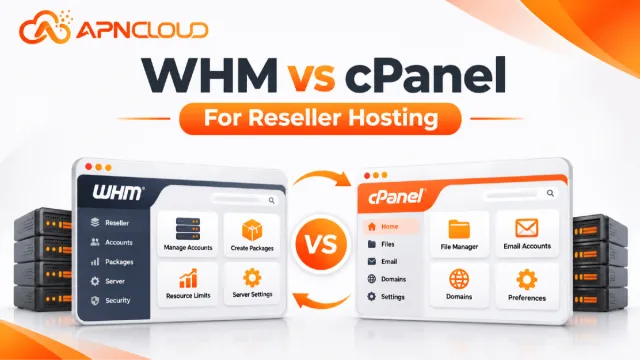
WHM vs cPanel Reseller Hosting: What's the Difference?
WHM and cPanel serve different but complementary purposes in reseller hosting. WHM helps resellers create hosting accounts, manage packages, and allocate resources, while cPanel allows customers to manage their individual websites. This comprehensive guide explains their differences, features, benefits, and practical applications to help beginners establish and manage a successful reseller hosting business.

How Much Does Reseller Hosting Cost in 2026?
Planning to start a web hosting business in 2026? Learn how much reseller hosting costs, what affects pricing, which hidden expenses to consider, and how to calculate potential profits. This beginner-friendly guide explains hosting packages, billing options, startup budgets, and practical ways to build a sustainable reseller hosting business with APNCloud.
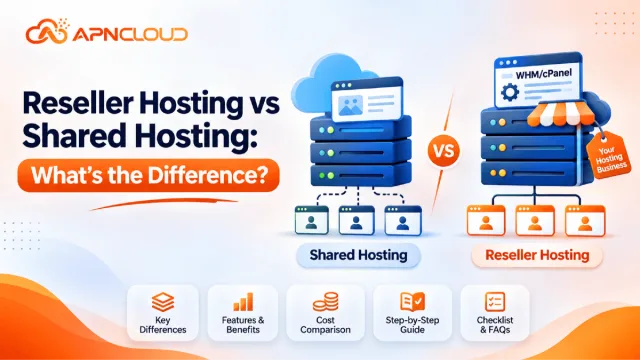
Reseller Hosting vs Shared Hosting: What's the Difference?
Learn the key differences between reseller hosting and shared hosting, including features, pricing, performance, and benefits. Discover which hosting solution is best for your website, web development agency, or hosting business with APNCloud.
Never miss a post
Fresh guides, product updates and hosting resources from the APNCloud team.