How Much Does Reseller Hosting Cost in 2026?
Planning to start a web hosting business in 2026? Learn how much reseller hosting costs, what affects pricing, which hidden expenses to consider, and how to calculate potential profits. This beginner-friendly guide explains hosting packages, billing options, startup budgets, and practical ways to build a sustainable reseller hosting business with APNCloud.

Starting a web hosting business has become more accessible than ever, but understanding the actual reseller hosting cost remains one of the most important steps before investing your money. Many beginners assume that launching a hosting company requires expensive physical servers, a dedicated data center, specialized networking equipment, and a large technical team. Although those resources may be necessary for certain hosting providers, they are not essential for everyone entering the market. Reseller hosting allows individuals and small businesses to purchase hosting resources from an established provider and sell hosting services to their own customers under a separate business identity. This approach significantly reduces the infrastructure requirements associated with starting a traditional hosting company. However, the advertised monthly package price represents only one part of the overall investment. A responsible entrepreneur must also consider billing software, domain registration, customer support, payment processing, marketing, security, and future resource upgrades. Understanding these expenses helps you avoid unrealistic expectations and establish a more sustainable business model.
In 2026, reseller hosting prices vary considerably depending on the provider, server infrastructure, allocated resources, management features, and included services. Some entry-level packages may cost approximately $5 to $15 per month, while more capable business-oriented plans can range from $20 to $60 or higher. Premium reseller solutions with additional resources, management services, or specialized infrastructure may cost significantly more. These figures are illustrative market-planning ranges rather than verified quotations from individual hosting providers. Actual prices depend on location, billing cycle, promotions, currency conversion, and package specifications. For example, a hosting reseller targeting a small portfolio of personal websites may require substantially fewer resources than an agency managing multiple busy e-commerce websites. Consequently, choosing the cheapest available plan does not automatically produce the lowest long-term operating cost. A package that initially appears affordable may become expensive if it requires frequent upgrades, charges separately for essential features, or cannot accommodate customer growth. Comparing the total cost of ownership provides a much more reliable foundation for decision-making.
Another important consideration is the relationship between reseller hosting expenses and potential business revenue. A reseller does not simply purchase server resources for personal use. Instead, those resources become part of a commercial service that must generate enough income to cover operating expenses and compensate the business owner for time, support, and risk. Suppose a beginner purchases a reseller package for $15 per month and creates ten customer hosting accounts. If each customer pays $5 monthly, the business generates $50 in gross monthly revenue before additional expenses. Although this example demonstrates the potential of recurring hosting revenue, actual profitability depends on payment fees, software subscriptions, marketing costs, support requirements, taxes, and customer retention. A realistic business plan should include these costs rather than assuming that the difference between hosting revenue and the reseller package price represents pure profit.
This guide explains how reseller hosting pricing works in 2026, what influences package costs, which expenses beginners frequently overlook, and how to estimate startup budgets and potential profit margins. You will also learn how to compare providers, calculate customer pricing, avoid common purchasing mistakes, and choose a suitable package for your business goals. Whether you are a freelance developer planning to host client websites, a digital agency expanding its services, or an entrepreneur launching a new hosting brand, understanding reseller hosting cost will help you make informed decisions. By the end of this guide, you should have a practical framework for estimating your investment, evaluating hosting packages, and planning a scalable hosting business without unnecessary infrastructure spending.
What Is Reseller Hosting and Why Does Its Cost Matter?
Reseller hosting is a web hosting service that allows an individual or company to purchase hosting resources from a larger provider and distribute those resources among multiple customer accounts. Rather than maintaining physical servers or building an independent hosting infrastructure, the reseller relies on the provider for underlying server operations while concentrating on customer relationships, hosting packages, billing, and business development. A typical reseller hosting account includes allocated storage, bandwidth or transfer allowances, account management tools, and the ability to create separate hosting environments for customers. Depending on the provider, additional features may include private nameservers, branding options, backup systems, security tools, and technical support. This arrangement makes reseller hosting particularly attractive to web developers, freelancers, marketing agencies, and entrepreneurs who want to sell hosting without becoming full-scale infrastructure operators. However, reseller hosting does not eliminate business responsibilities. The reseller must still explain services accurately, manage customers, handle billing, respond to support requests, and ensure that the packages sold are appropriate for the resources available.
Understanding reseller hosting cost matters because the hosting package becomes a recurring business expense rather than a one-time purchase. A beginner might focus exclusively on the advertised monthly price and overlook how that expense affects future profitability. For example, a $10 monthly package may appear inexpensive, but it could offer limited storage, account capacity, or computing resources. If customer demand grows quickly, upgrading to a larger package may become necessary. Conversely, purchasing a premium package before acquiring customers can create unnecessary monthly expenses. The appropriate choice depends on expected customer numbers, website requirements, available startup capital, and projected revenue. A small reseller hosting business serving five brochure websites has different needs from an agency hosting thirty WordPress websites with frequent updates and substantial visitor traffic. Calculating these requirements before purchasing helps businesses select resources based on actual demand instead of marketing claims or assumptions.
The cost of reseller hosting also influences how a business positions its services in the market. Some hosting resellers compete primarily on price, while others focus on specialized support, website maintenance, security management, or industry-specific hosting packages. A reseller offering basic shared hosting may charge relatively modest customer fees. An agency providing hosting alongside WordPress updates, monitoring, troubleshooting, and website maintenance can potentially charge more because customers receive additional services. These approaches have different cost structures. Low-cost hosting generally requires careful resource management and efficient support processes, while service-oriented packages require additional staff time and operational planning. Neither approach guarantees profitability. The important objective is to understand what customers receive, what the reseller must provide, and whether the selling price can sustainably cover those obligations. This makes cost analysis a central part of service design rather than merely a purchasing decision.
For beginners, reseller hosting also offers an opportunity to test business demand before making larger infrastructure investments. Instead of immediately purchasing a virtual private server or dedicated server, a new hosting entrepreneur can begin with a manageable reseller account, attract customers, evaluate support requirements, and expand when revenue justifies additional resources. This gradual approach can reduce financial exposure, but only when the chosen provider offers suitable performance, clear resource policies, and practical upgrade options. The lowest advertised price should never be the only deciding factor. Server reliability, backup arrangements, technical assistance, security practices, and service limitations all affect customer satisfaction and the reseller's reputation. Understanding these connections makes it easier to identify a hosting plan that supports both immediate affordability and long-term business development. For a deeper introduction to the operating model, read APNCloud's hosting resources and explore the available reseller hosting information before comparing packages.
How Much Does Reseller Hosting Cost in 2026?
The average reseller hosting cost in 2026 depends on the level of resources and services included in the package. Entry-level reseller hosting is generally designed for beginners, freelance developers, and small businesses managing a limited number of websites. Mid-range packages typically offer additional storage, greater account allowances, or more generous resource allocations, making them suitable for growing hosting businesses. Premium reseller packages may provide higher resource limits, additional management services, or infrastructure designed for larger customer portfolios. Because hosting providers use different pricing structures, direct comparisons require more than checking the advertised monthly amount. A plan costing $12 per month may include certain features that another provider charges for separately. Similarly, a package advertised at a low introductory rate may renew at a significantly higher price. Understanding the difference between introductory pricing, regular renewal rates, and included features is essential for evaluating the actual financial commitment.
The following table provides illustrative budget ranges for reseller hosting in 2026. These estimates are intended for planning and should not be interpreted as verified live prices or guaranteed offers from APNCloud or other providers.
Reseller Hosting Type | Illustrative Monthly Cost | Suitable For |
|---|---|---|
Entry-Level Reseller | $5–$15 | Beginners and small portfolios |
Standard Reseller | $15–$30 | Freelancers and growing agencies |
Business Reseller | $30–$60 | Established hosting resellers |
Premium Reseller | $60–$120+ | Larger customer portfolios |
A beginner planning to host five or ten small websites may find an entry-level reseller package sufficient, provided its resource limits and account allowances match customer requirements. For instance, a simple business website with a few pages, moderate traffic, and limited email usage may require relatively modest resources. However, a website running a large online store, resource-intensive plugins, or frequent background processing can demand considerably more computing capacity. Storage and bandwidth alone do not determine how many websites a reseller package can support. CPU limits, memory allocation, concurrent processes, database activity, disk input/output, and provider policies may become important long before the advertised storage allocation is exhausted. Therefore, a reseller should estimate the type of websites customers will operate rather than calculating capacity solely by dividing total disk space by the number of accounts.
Billing duration can also change the effective monthly reseller hosting cost. Many hosting companies offer monthly, annual, biennial, or triennial billing options. Longer commitments may reduce the advertised equivalent monthly price, but they require larger upfront payments and may involve restrictions on refunds or cancellations. Suppose a reseller package costs $20 on monthly billing but is offered at an effective $16 per month when purchased annually. Paying for twelve months would require $192 upfront rather than $240 through twelve monthly payments, creating a potential $48 difference over the year. However, this saving is meaningful only if the reseller expects to use the service for the entire period and understands the renewal conditions. A new entrepreneur with limited cash reserves may prefer monthly billing while testing demand, even if the effective rate is slightly higher. An established business with predictable revenue may benefit more from longer billing commitments.
Another factor affecting reseller hosting prices is the geographic location of the hosting infrastructure. Providers operating in different regions may face different costs for data center space, electricity, network connectivity, equipment, and technical operations. These differences can influence pricing, but location should primarily be evaluated according to customer needs and network performance rather than price alone. A reseller targeting customers in Bangladesh, India, or Southeast Asia may want to compare nearby hosting locations with alternatives in the United States or Europe. The best location depends on website audiences, application requirements, latency, reliability, and available infrastructure. A lower-priced server in a distant region is not necessarily a poor choice, just as a nearby server is not automatically faster under every network condition. Testing performance and understanding provider specifications will help determine whether the cost is justified.
What Factors Affect Reseller Hosting Cost?
Several technical and commercial factors influence reseller hosting cost, and understanding them helps beginners compare packages more accurately. One of the most visible factors is storage capacity. Hosting providers may advertise storage allocations such as 20 GB, 50 GB, 100 GB, or larger amounts, depending on the package. The type of storage can also affect pricing. NVMe-based storage is commonly marketed for its performance characteristics, although actual website speed depends on the complete server configuration and workload. A reseller hosting business that primarily manages small company websites may not require extensive storage at the beginning. However, businesses hosting websites with large media libraries, frequent backups, or substantial email usage should consider how storage consumption may increase. It is also important to determine whether backups and email data count toward the advertised allocation. Understanding these details prevents surprises when customer accounts begin consuming more resources than originally expected.
CPU and memory resources represent another important component of hosting pricing. Websites require processing power to execute application code, respond to database queries, and handle visitor requests. WordPress websites with complex plugins, online stores, and frequently updated applications can place greater demands on server resources than simple static websites. Some reseller providers advertise specific CPU and RAM allowances, while others apply resource limits at the individual customer account level. A package may offer generous disk space but still impose relatively restrictive computing limits. For this reason, resellers should ask how resources are allocated, whether limits apply per account or across the reseller environment, and what happens when a customer exceeds them. A provider that clearly explains resource restrictions may be easier to operate with than one offering impressive marketing numbers without detailed usage policies. Transparent resource allocation helps the reseller design customer packages that can perform reliably under expected workloads.
Account management software and licensing arrangements can also influence reseller hosting expenses. Many resellers are familiar with WHM, which is used to manage hosting accounts in environments based on cPanel. A cPanel reseller may receive access to WHM for account creation, package management, and related administrative tasks, depending on the provider's configuration. Other hosting platforms provide comparable account management functions through different interfaces. Licensing costs may already be included in the reseller package or reflected in separate fees, depending on the service model. Before purchasing, businesses should verify which management tools are available and whether the advertised price includes all necessary licensing. They should also check the number of customer accounts permitted, whether account limits are fixed, and whether additional fees apply when expanding. The presence of a familiar control panel does not automatically make a package more economical if other essential services are missing.
Security, backups, customer support, and infrastructure management are equally important pricing factors. A reseller package may include automated backups, malware scanning, SSL certificate availability, monitoring, and technical support, but the exact coverage varies by provider. Some services may be included at no additional charge, while others require paid upgrades or third-party subscriptions. For example, a backup feature may create copies automatically but impose limitations on retention periods or restoration requests. Similarly, technical support may cover server-level problems without providing direct assistance to the reseller's end customers. These distinctions matter because the reseller remains responsible for communicating with customers and maintaining the quality of the overall service. A slightly more expensive hosting package may offer better long-term value if it reduces operational complexity and avoids separate software expenses. The correct comparison is therefore the total cost of providing a reliable customer experience, not simply the base reseller hosting subscription.
Hidden Costs of Starting a Reseller Hosting Business
One of the most common mistakes beginners make when evaluating reseller hosting cost is assuming that the advertised hosting package includes every expense necessary to operate a business. In reality, a hosting reseller may need several additional services before accepting customers. These expenses depend on the business model, target market, and level of automation. A freelancer hosting websites for existing clients may need little more than a suitable reseller account and a payment collection method. However, someone planning to launch an independent hosting brand may require a business domain, website, automated billing system, payment gateway, customer support tools, and marketing resources. These components can increase startup and operating expenses even when the underlying hosting subscription is affordable. Identifying them early helps entrepreneurs avoid launching services at prices that cannot cover ongoing obligations. It also makes financial planning more realistic because the business owner can distinguish essential expenses from optional features that may be introduced later.
A business domain and website are among the first potential expenses. A hosting company needs a professional online presence where prospective customers can review packages, understand service terms, and contact support. Domain registration fees vary by extension, registrar, promotional offer, and renewal period. A common domain extension may have a relatively affordable introductory price but a higher renewal rate. Website development costs also vary significantly. A developer who can build a website independently may spend very little beyond hosting and domain expenses, while an entrepreneur hiring a designer or development agency may need a larger initial budget. The website should explain package specifications, payment methods, refund conditions, support availability, and service limitations clearly. A polished website is useful, but expensive custom development is not always necessary for a new hosting reseller. A simple, functional website with accurate information and a reliable ordering process can provide a practical starting point.
Billing automation is another expense worth examining. Hosting businesses often use specialized software to create invoices, process orders, track renewals, suspend overdue services, and manage customer records. WHMCS is one example of a billing and automation platform used by hosting companies, although other commercial and open-source alternatives exist. Licensing fees and included functionality differ by product and subscription. Some reseller hosting providers bundle billing software with selected plans, while others require customers to purchase it separately. A beginner should verify whether a license is included, which version or customer limits apply, and whether additional integration or configuration expenses are necessary. Payment processing can create further costs through transaction fees, currency conversion, withdrawal charges, or minimum settlement requirements. Businesses accepting payments from multiple countries should also consider supported currencies and applicable payment-provider rules. These expenses may appear small individually, but they can materially affect profit margins when customers purchase inexpensive hosting packages.
Customer support and marketing expenses are frequently underestimated as well. Even when the upstream hosting provider manages server infrastructure, the reseller usually remains the primary contact for customers. Support requests may involve website errors, email configuration, domain settings, account access, SSL certificates, or billing questions. Handling these issues requires time, technical knowledge, and a consistent support process. A solo entrepreneur may initially provide support personally, but that time still has economic value. As the customer base grows, additional staff or support software may become necessary. Marketing also requires planning. Search engine optimization, content creation, online advertising, social media management, and promotional offers can all contribute to customer acquisition costs. Spending heavily on advertising before understanding customer profitability can quickly exhaust a small startup budget. A more sustainable approach is to identify essential expenses, calculate realistic revenue expectations, and expand marketing gradually as the business develops.
Example: Estimated Monthly Operating Expenses
Expense | Illustrative Monthly Budget |
|---|---|
Reseller hosting package | $20 |
Billing software | $15 |
Domain cost allocation | $1.50 |
Website maintenance/tools | $5 |
Marketing | $20 |
Miscellaneous expenses | $8.50 |
Total estimated monthly expenses | $70 |
These amounts are hypothetical budgeting assumptions, not quotations or confirmed prices. Payment processing, taxes, paid support, and other variable expenses may increase the total.
Monthly vs Annual Reseller Hosting: Which Costs Less?
When evaluating reseller hosting cost, choosing the billing cycle can be almost as important as selecting the package itself. Hosting providers commonly offer several payment schedules, including monthly, quarterly, semiannual, annual, biennial, and triennial billing. Not every provider supports every option, and discounts vary. Monthly billing generally offers flexibility because customers make smaller payments and can reassess their service requirements more frequently. Annual billing often reduces the effective monthly rate but requires a larger upfront commitment. Longer billing periods may offer additional discounts, although the savings should always be compared against the financial risks of committing to a service before evaluating its long-term suitability. For a new reseller hosting business, preserving available cash can be especially important because early revenue may be unpredictable. Money spent on a long hosting subscription cannot simultaneously be used for advertising, software, customer support, or unexpected operational expenses. Consequently, the cheapest effective monthly rate does not always represent the most practical choice for every entrepreneur.
Consider a hypothetical reseller hosting package advertised at $20 per month on a monthly billing cycle. If the provider offers the same package at an effective $17 per month for annual billing, the annual payment would be $204 rather than $240 over twelve monthly payments. This represents a $36 saving across the year. Suppose a three-year commitment reduces the effective monthly rate to $15. The total payment would then be $540 for thirty-six months, compared with $720 if the monthly rate remained $20 throughout that period. The potential saving would be $180 over three years. These calculations assume unchanged package specifications and pricing, with no taxes or additional charges. Actual providers may apply different renewal rates, promotional restrictions, or service conditions. The calculations demonstrate how longer billing periods can reduce nominal hosting expenses, but they do not establish that a three-year commitment is automatically the best decision.
Reseller Hosting Billing Comparison
Monthly billing is particularly useful for entrepreneurs who are testing a provider for the first time. It allows the business owner to evaluate website performance, support responsiveness, backup procedures, and account management features before making a larger commitment. During this testing period, the reseller can create sample accounts, configure websites, monitor resource usage, and become familiar with administrative tools. However, monthly billing also has disadvantages. The effective price may be higher, and frequent invoices require ongoing payment management. Businesses with irregular cash flow must ensure that subscription payments are completed on time to avoid service interruptions. Because hosting services support customer websites, missed payments can affect more than the reseller's own operations. A responsible business owner should maintain sufficient funds for renewals regardless of the selected billing cycle.
Annual billing may be more attractive after a reseller has established confidence in the provider and developed a predictable customer base. If hosting revenue consistently covers operating expenses, paying annually can reduce administrative work and potentially lower total subscription costs. However, entrepreneurs should examine renewal terms carefully. A discounted first-year price may not continue into the second year. Similarly, a package purchased during a promotional campaign may have specific refund or cancellation conditions. Before committing to a longer term, confirm the regular renewal price, included features, resource limits, upgrade options, and applicable refund policy. The decision should also reflect customer payment behavior. If customers mostly pay monthly, the reseller must maintain sufficient working capital to cover an annual upstream hosting payment. If customers pay annually, the business should reserve enough money to provide the promised service throughout their subscription period. This financial discipline helps prevent situations where upfront customer payments are spent before the corresponding service obligations have been fulfilled.
How Much Money Do You Need to Start a Hosting Business?
Starting a hosting business with reseller hosting can require considerably less capital than operating independent servers, but the actual startup budget depends on the services you plan to provide. A small freelance developer may already own a domain, have an established website, and possess the technical knowledge needed to manage customer accounts. In that situation, the initial expense may consist mainly of a reseller hosting subscription and any required software. An entrepreneur building a new hosting brand from the beginning may need to allocate funds for branding, website development, billing automation, payment integration, marketing, and customer support. These differences explain why there is no single startup budget suitable for every reseller hosting business. Instead of relying on a universal figure, beginners should prepare a budget based on their intended business model, available resources, and realistic customer acquisition expectations. A modest launch can be effective when the owner understands technical responsibilities and avoids purchasing unnecessary services before customer demand exists.
For planning purposes, a basic reseller hosting business might require approximately $50 to $150 in initial cash if the owner already has a website and can handle most technical work independently. A more developed launch involving paid billing tools, a new website, branding, and promotional activities might require several hundred dollars or more. These figures are illustrative scenarios rather than guaranteed startup costs. A business requiring professional development, substantial advertising, or additional staff could spend significantly more. The most important budgeting principle is to separate initial setup expenses from recurring monthly obligations. For example, a logo design may be a one-time cost, while reseller hosting, billing software, domain renewals, and support services create continuing financial commitments. Businesses that overlook recurring expenses may appear profitable during their first month but struggle when renewals become due. A simple cash-flow forecast covering at least the next three to six months can help identify potential funding gaps before they become operational problems.
Interactive Reseller Hosting Startup Calculator
A practical startup budget should also include a reserve for unexpected expenses. Customer support problems, account migrations, additional storage requirements, payment disputes, and software upgrades can create costs that were not anticipated during launch. Even when the upstream hosting provider offers reliable infrastructure, the reseller may occasionally need to spend additional time or money resolving customer issues. Maintaining a small financial reserve reduces the risk of being unable to respond to those situations. Entrepreneurs should also avoid using all available funds for advertising before establishing a dependable service delivery process. Acquiring customers is valuable only when the business can provide the promised hosting service and maintain satisfactory support. Testing the complete customer journey—from ordering and payment to account activation, website deployment, and renewal—can reveal operational weaknesses before larger marketing campaigns begin.
Another useful approach is to launch in stages. During the first stage, focus on a suitable hosting package, a professional website, clear service descriptions, and a reliable payment process. During the second stage, introduce billing automation, support improvements, and marketing activities as customer numbers increase. During the third stage, consider larger reseller packages, additional services, or specialized hosting solutions when actual demand supports the investment. This staged approach does not guarantee commercial success, but it helps align expenses with business growth. For beginners who want to understand the broader process, the APNCloud website provides a starting point for exploring hosting services and available solutions. Before purchasing any package, confirm current specifications and pricing directly with the provider.
How to Calculate Reseller Hosting Profit Margins
Calculating potential profit is one of the most important parts of understanding reseller hosting cost. A reseller hosting business generates revenue by selling hosting packages or related services to customers, but revenue alone does not indicate financial success. The business must cover its upstream hosting subscription, software licenses, payment processing charges, customer support, marketing, taxes, and other operating expenses. Beginners sometimes calculate profit by subtracting the reseller package price from total customer payments. Although this provides a rough contribution estimate, it ignores other costs that can substantially reduce earnings. A more useful calculation begins with total monthly revenue and deducts all identifiable monthly expenses. If the business collects payments annually, revenue and service costs should be allocated across the corresponding service period for planning purposes. This approach makes monthly performance easier to understand and reduces the risk of treating advance customer payments as immediately available profit.
Consider a hypothetical reseller who operates twenty customer hosting accounts. Each customer pays $6 per month, generating $120 in monthly revenue. The reseller pays $20 for hosting resources, $15 for billing software, and $35 for other operating expenses, including marketing and basic tools. Total expenses are therefore $70, leaving a monthly operating surplus of $50 before taxes, additional variable expenses, and compensation for the owner's time. The corresponding operating margin is approximately 41.7%. This is a simplified example, not a forecast of actual reseller hosting profitability. Real businesses may experience unpaid invoices, promotional discounts, customer cancellations, payment processing fees, and unexpected support costs. Some customers may also consume significantly more resources than others, requiring package adjustments or upgrades. A realistic forecast should account for these possibilities rather than assuming every customer produces identical revenue and expenses.
Break-even analysis is another valuable tool for hosting resellers. The break-even point represents the level of revenue needed to cover operating expenses without producing a profit or loss under the assumptions used. Suppose monthly fixed operating expenses are $70 and each customer pays $6. If there are no additional per-customer costs, the reseller needs twelve paying customers to generate $72 and exceed the fixed expense amount. However, this calculation becomes more complex when each customer creates variable costs. Payment processing charges, paid backups, support labor, and resource usage may reduce the amount contributed by each account. A more accurate break-even calculation divides fixed expenses by the average contribution per customer after variable costs. This distinction becomes increasingly important as the business expands. Selling more accounts does not always improve profitability if those accounts require disproportionate support or infrastructure resources.
A sustainable reseller hosting business should also monitor customer retention and acquisition costs. Customer acquisition cost measures how much the business spends to obtain a paying customer, while retention reflects how effectively the company maintains existing relationships. For example, spending $100 on advertising to acquire ten customers creates an average acquisition cost of $10 per customer, excluding other sales expenses. If those customers purchase $3 monthly hosting packages and leave after one month, recovering the acquisition cost may be difficult. If customers remain subscribed for longer periods and generate positive contribution margins, the economics can improve. However, retention cannot be assumed. Businesses should track actual renewals, cancellations, support requests, and revenue rather than relying on optimistic projections. Offering reliable service, transparent pricing, helpful support, and appropriate hosting packages can contribute to customer satisfaction, but none of these measures guarantees long-term retention. Financial monitoring should therefore become a regular business practice rather than a one-time calculation completed before launch.
Step-by-Step Guide to Choosing Affordable Reseller Hosting
Choosing the right reseller hosting package requires a structured evaluation rather than simply selecting the lowest advertised price. Beginners often compare providers by storage capacity and monthly cost while overlooking the services necessary to operate a reliable hosting business. A more effective approach begins with defining the intended customer base and continues through resource planning, feature comparison, cost calculation, and testing. This process helps identify packages that meet present requirements without creating unnecessary expenses. It also reduces the likelihood of selecting a provider that cannot support future business growth. The following steps provide a practical framework for evaluating reseller hosting in 2026. Although the steps are written for beginners, they are also useful for freelancers and agencies reviewing existing hosting arrangements.
Step 1: Identify your target customers
Determine whether you plan to serve personal websites, small businesses, WordPress users, agencies, or online stores. Different customer types have different resource and support requirements. Understanding your audience helps establish realistic hosting specifications and selling prices.
Step 2: Estimate your initial account requirements
Calculate how many websites you expect to host during the first three to six months. Consider the approximate storage, traffic, email, and computing requirements of each customer. Leave room for reasonable growth rather than purchasing exactly enough resources for the initial accounts.
Step 3: Visit APNCloud
Open APNCloud.com and review the available hosting services. Locate the reseller hosting offerings through the website's navigation or contact the sales team for current package information.
Step 4: Compare reseller hosting packages
Review storage allocations, bandwidth policies, account limits, computing resources, backup arrangements, SSL support, and management features. Confirm which services are included and whether optional features involve additional charges.
Step 5: Check the management and branding options
Verify whether the package supports individual customer accounts, customized hosting packages, private nameservers, and the level of branding you need. If you specifically require WHM or a cPanel reseller environment, confirm availability before ordering.
Step 6: Calculate the complete business cost
Add the hosting subscription to expected billing software, domain, website, payment processing, marketing, and support expenses. Compare monthly and annual billing using both introductory and renewal prices.
Step 7: Review support and service policies
Read the terms of service, acceptable use policy, refund conditions, and backup policies. Ask how technical problems are handled, which support responsibilities belong to the reseller, and what happens when resource limits are exceeded.
Step 8: Choose a suitable plan and place your order
Select the package that matches your current requirements and budget. Complete registration, provide accurate billing information, and follow the provider's payment and verification procedures. Review the order summary before making payment.
Step 9: Configure and test your hosting environment
Once the service is activated, configure the available management tools, nameservers, customer packages, and security settings. Create a test account and verify website loading, SSL functionality, email configuration, backups, and account management.
Step 10: Launch your hosting services and monitor costs
Publish clear customer packages, establish support procedures, and begin acquiring customers. Monitor resource usage, renewals, revenue, and operating expenses. Upgrade your hosting resources when actual usage and customer demand justify the change.
Following these steps can help new resellers make more informed purchasing decisions, but the evaluation should continue after the hosting service becomes operational. A package that works well for five websites may not remain appropriate when the business reaches fifty customers. Monitoring storage, resource consumption, customer support requests, and service performance provides evidence for future upgrades. It is also important to review customer packages periodically. If the reseller offers more storage, bandwidth, or computing resources than the upstream plan can reasonably support, the business may experience performance problems or unexpected expenses. Package descriptions should therefore reflect actual capabilities rather than unsupported promises. Resellers should also avoid advertising unlimited resources unless the provider's policies genuinely support the relevant claims and any limitations are explained clearly. Transparent specifications make it easier for customers to choose suitable services and reduce disputes over resource usage.
The final decision should balance affordability, operational simplicity, technical suitability, and future flexibility. A slightly higher hosting subscription may be worthwhile when it includes essential features that would otherwise require separate payments. Conversely, paying for advanced capabilities that customers do not need can unnecessarily reduce early profitability. Beginners should document why a particular package was selected, what resources it provides, and which circumstances would trigger an upgrade. This creates a simple operating plan that can be reviewed as the business develops. A successful hosting reseller does not need to purchase the largest available package immediately. The objective is to establish a dependable service, understand actual customer requirements, and expand infrastructure responsibly. By treating hosting selection as an ongoing business decision rather than a one-time purchase, entrepreneurs can manage reseller hosting cost more effectively throughout different stages of growth.
Common Mistakes That Increase Reseller Hosting Cost
Many beginners spend more on reseller hosting than necessary because they make purchasing and operational decisions without a clear business plan. One frequent mistake is selecting a package based entirely on its advertised price. A low monthly subscription may seem attractive, but the package could have restrictive account limits, insufficient computing resources, limited backup functionality, or additional charges for essential features. When these limitations become apparent, the reseller may need to upgrade, purchase third-party services, or move customer accounts to another provider. Such changes can increase expenses and create unnecessary administrative work. Another common mistake is purchasing excessive resources before acquiring customers. A new hosting business with only three small websites may not need a premium package designed for a much larger customer portfolio. Paying for unused capacity reduces available funds for marketing, support, and other activities that could help the business grow. The most practical approach is to match hosting resources to realistic demand while maintaining sufficient capacity for reasonable expansion.
Ignoring renewal prices is another mistake that can significantly affect long-term expenses. Hosting providers sometimes offer promotional discounts for initial purchases, particularly when customers select longer billing periods. These offers may provide genuine savings, but entrepreneurs should verify what happens when the promotional term ends. A package that costs $12 per month during the first year might renew at a higher rate, changing the economics of the reseller's customer packages. If the business has promised customers fixed prices without accounting for future supplier expenses, the reseller may experience shrinking margins. This risk can be reduced by documenting regular renewal rates, reviewing contractual terms, and maintaining a financial reserve. The same principle applies to software subscriptions and domain renewals. A sustainable hosting business should calculate operating costs using realistic long-term assumptions rather than relying exclusively on temporary discounts.
Underpricing customer hosting packages is another serious concern. New resellers sometimes attempt to attract customers by offering extremely low prices without calculating the full cost of service delivery. Although competitive pricing can help generate interest, it becomes problematic when customer revenue cannot cover infrastructure, billing software, payment fees, support time, and marketing. For example, a reseller charging $1 per month may need a substantial number of customers to cover even modest operating expenses. If each account generates support requests or consumes significant server resources, the business may become difficult to maintain. Beginners should calculate the minimum sustainable selling price before publishing packages. They should also consider offering different service levels instead of competing exclusively on price. Basic hosting, managed WordPress support, website maintenance, and other legitimate services can be priced according to the actual work and resources involved.
Poor resource management can also create unexpected expenses. Resellers must understand that the number of accounts permitted by a hosting plan does not necessarily indicate how many active websites the infrastructure can comfortably support. Two websites with similar storage usage may have very different CPU, memory, database, and traffic requirements. If a reseller creates too many demanding customer accounts, performance problems may occur even when substantial disk space remains available. Regular monitoring helps identify unusual resource consumption before it affects other customers. Clear customer package limits, appropriate usage policies, and timely upgrades are important parts of responsible service management. Resellers should avoid deliberately concealing resource limitations or selling capabilities that the upstream hosting service does not provide. Accurate marketing and transparent communication are more sustainable than promises that cannot be fulfilled.
Finally, some hosting entrepreneurs underestimate the importance of customer support, backups, and security. A provider may manage the underlying server, but the reseller usually remains responsible for responding to customers and coordinating solutions. Without a reliable support process, even minor technical problems can consume considerable time. Inadequate backup planning may also create significant recovery costs if customer data becomes unavailable. Resellers should understand what their hosting provider backs up, how frequently backups are created, how long they are retained, and whether restoration involves additional fees. Where appropriate, independent backup arrangements may provide additional protection. Security practices, software updates, strong authentication, and clear account management procedures also deserve attention. These measures may involve modest expenses, but ignoring them can create larger operational and financial problems. Avoiding common mistakes helps protect both customer relationships and the long-term sustainability of the hosting business.
Reseller Hosting Cost Checklist Before Purchasing
Before purchasing reseller hosting, beginners should complete a structured checklist to confirm that the selected package matches their business requirements. The purpose of this checklist is not simply to find the lowest possible price. Instead, it helps identify the complete financial commitment, understand technical limitations, and evaluate whether the service can support customers reliably. A suitable package should provide enough resources for the expected workload, clear billing terms, appropriate management features, and practical options for future expansion. Entrepreneurs should also consider whether they possess the technical knowledge required to manage customer accounts and provide basic support. If additional assistance is necessary, the corresponding expense should be included in the business budget. Completing this evaluation before payment can reduce the likelihood of unexpected upgrades, customer dissatisfaction, or operating losses.
Pre-Purchase Checklist:
I have identified my target customers and website types.
I have estimated my initial customer account requirements.
I have compared storage, bandwidth, CPU, and RAM policies.
I have checked the permitted number of hosting accounts.
I have verified management tools and branding options.
I have reviewed backup, SSL, and security features.
I understand monthly pricing and regular renewal costs.
I have checked billing software and payment processing expenses.
I have reviewed support responsibilities and service policies.
I have calculated customer pricing and the break-even point.
I have reserved funds for unexpected operating expenses.
I understand the upgrade and migration options.
After completing the checklist, review your findings together rather than treating each item independently. For example, a hosting package may offer excellent storage capacity and attractive pricing but provide limited customer account allowances. Another package may support more accounts but lack features that your business requires. Comparing the complete package helps determine which option offers better value for your specific situation. You should also consider how easily the service can expand. If your customer base grows faster than expected, an upgrade path may be important. Ask whether upgrading requires account migration, whether existing configurations can be retained, and whether any additional charges apply. These questions are particularly relevant when a reseller manages customer websites that cannot tolerate unnecessary disruption.
Financial preparation should continue beyond the initial purchase. Maintain records of hosting subscriptions, software licenses, domain renewals, customer payments, and other operating expenses. Review these records regularly to identify changes in profit margins and resource requirements. It is also useful to establish a renewal calendar so that important subscriptions are not overlooked. Customer payments should be managed carefully, particularly when annual subscriptions are collected in advance. Receiving a full year's payment does not eliminate the responsibility to provide hosting throughout the agreed service period. Reserving sufficient funds for future obligations helps maintain operational stability. By combining technical evaluation with disciplined financial management, beginners can make reseller hosting decisions that support both customer satisfaction and responsible business growth.
Frequently Asked Questions About Reseller Hosting Cost
1. How much does reseller hosting cost per month in 2026?
Reseller hosting cost in 2026 varies according to the provider, included resources, account limits, and management features. For general budgeting, entry-level packages may fall around $5 to $15 per month, while mid-range options may cost approximately $15 to $60. Premium services can exceed $60 or $100 per month depending on their specifications. These figures are illustrative rather than verified live market averages. Actual pricing may differ because of promotional discounts, billing duration, regional infrastructure costs, and optional services. Beginners should compare the total cost of ownership instead of evaluating only the advertised subscription amount.
2. Is reseller hosting cheaper than buying a VPS?
Reseller hosting can be more affordable and easier to manage than a VPS for beginners who primarily want to sell standard website hosting. A reseller package commonly includes server administration handled by the upstream provider, whereas a self-managed VPS may require operating system maintenance, security configuration, hosting software, backups, and technical troubleshooting. However, reseller hosting is not always cheaper in every situation. VPS pricing, included management services, licensing costs, and resource requirements vary considerably. A business with specialized applications or substantial technical expertise may find a VPS more appropriate. The correct choice depends on total expenses, administrative responsibilities, and customer requirements.
3. Can I start a reseller hosting business with $50?
A small reseller hosting business may be able to begin with approximately $50 if the owner already has a website, domain, technical knowledge, and a suitable low-cost hosting package. However, $50 is not a guaranteed or universally sufficient startup budget. Billing automation, marketing, payment processing, and other services can increase initial expenses. Beginners should calculate the actual amount required for their chosen setup and maintain additional funds for recurring payments. Starting with a limited customer portfolio and expanding gradually may help reduce financial exposure while testing market demand.
4. How many websites can I host with a reseller hosting plan?
The number of websites depends on the package's account limits, storage capacity, computing resources, bandwidth policies, and the requirements of individual websites. Some packages impose a fixed number of customer accounts, while others use different allocation models. A plan with substantial storage may still be unsuitable for numerous resource-intensive websites. WordPress plugins, database activity, email usage, and visitor traffic can all influence performance. Before creating customer packages, review the provider's resource policies and estimate realistic usage. Avoid assuming that an advertised account allowance guarantees identical performance for every possible website.
5. Do I need WHMCS to start reseller hosting?
WHMCS is not mandatory for every reseller hosting business, but billing automation can become valuable as customer numbers increase. A beginner managing a few existing clients may initially use simpler invoicing and account management processes. A larger hosting business may benefit from software that automates invoices, renewals, provisioning, and customer records. WHMCS is one available option, and alternative systems may also meet business requirements. Before selecting software, compare licensing fees, integration compatibility, security, maintenance requirements, and the features actually needed. Some hosting providers may include billing software with selected packages, but this should be verified before purchasing.
6. Is cPanel reseller hosting more expensive?
A cPanel reseller package may have different pricing from packages using other management platforms because licensing, infrastructure, and service arrangements vary. However, the control panel alone does not determine the total package price. Providers may bundle licensing into their advertised subscription, while others apply separate fees or account-based restrictions. A reseller who requires WHM and cPanel should confirm exactly what is included, how many accounts are supported, and whether additional charges apply. Comparing the complete service is more useful than assuming one platform is always more expensive or more economical.
7. Can reseller hosting generate passive income?
Reseller hosting can generate recurring revenue, but describing it as entirely passive income would be misleading. Customers require billing assistance, technical support, renewals, security coordination, and occasional troubleshooting. Even when provisioning and invoicing are automated, someone must monitor operations and respond to problems. A well-organized hosting business may reduce repetitive administrative work through automation and documented procedures. However, the owner remains responsible for maintaining service quality and managing customer relationships. Profitability depends on customer retention, pricing, operating expenses, and the amount of work required to deliver the service.
8. What is the best reseller hosting package for beginners?
The best beginner package is one that provides enough resources for expected customer websites without creating unnecessary expenses. Important considerations include storage, computing limits, account allowances, backup arrangements, support availability, billing terms, and upgrade flexibility. Beginners should avoid choosing packages solely because they advertise the largest storage allocation or lowest promotional price. A practical starting point is to estimate the first few months of customer demand and select a package with reasonable additional capacity. Reviewing provider policies and testing the service before expanding can help reduce purchasing mistakes.
9. Are there hidden fees in reseller hosting?
Additional expenses may exist depending on the provider and selected services. Examples include billing software licenses, premium backups, dedicated IP addresses, domain registration, additional storage, paid security tools, migration services, and payment processing fees. Not every provider charges separately for these features, and some may include them in particular packages. The most reliable way to identify additional costs is to review the complete package specification, renewal terms, and service agreement. Ask the provider to clarify any feature or charge that is not clearly explained before making payment.
10. How much profit can I make from reseller hosting?
Potential profit depends on customer numbers, selling prices, resource usage, support costs, marketing expenses, and other operating obligations. For example, twenty customers paying $6 monthly generate $120 in gross revenue. If total operating expenses are $70, the business has a $50 operating surplus before taxes and any additional unaccounted costs. This is a hypothetical calculation rather than a guaranteed result. Actual profitability may be higher or lower. Beginners should calculate break-even requirements, monitor customer acquisition costs, and review recurring expenses regularly before making expansion decisions.
11. Should I choose monthly or yearly reseller hosting?
Monthly billing offers greater flexibility and may be appropriate when testing a provider or launching a new business. Annual billing can reduce the effective monthly cost when discounts are available, but it requires a larger upfront payment. The correct choice depends on available capital, confidence in the provider, renewal conditions, and expected customer demand. Beginners should compare total payments across billing periods and verify whether introductory discounts continue at renewal. Longer commitments are most appropriate when the business understands its resource requirements and can comfortably afford the upfront expense.
12. Can I upgrade my reseller hosting package later?
Many hosting providers offer upgrade options, but the process and available features vary. Some upgrades may increase storage, account limits, or other resources without requiring major changes. Other situations may involve migration or configuration adjustments. Before purchasing, ask the provider whether upgrades are available, what they cost, and whether existing customer accounts can remain operational during the process. Planning for growth is important because a hosting reseller may eventually require more resources than the initial package provides. A clear upgrade path can help reduce operational disruption as the business expands.
Is Reseller Hosting Worth the Cost in 2026?
Reseller hosting can be a practical way to start a web hosting business in 2026 without purchasing physical servers or building an independent data center. Its main financial advantage is the ability to begin with a relatively manageable infrastructure subscription while concentrating on customer acquisition, service delivery, and business development. However, the actual reseller hosting cost includes more than the monthly package price. Billing software, domain registration, website maintenance, payment processing, marketing, customer support, and future upgrades can all influence the amount required to operate sustainably. Beginners who understand these expenses are better prepared to establish realistic prices and avoid financial problems. Rather than focusing exclusively on the cheapest advertised package, entrepreneurs should evaluate the resources, management features, reliability, and support arrangements needed to serve their customers responsibly.
The potential value of reseller hosting also depends on the business model. Freelancers and web development agencies may find reseller hosting particularly useful because they can provide website hosting alongside existing development and maintenance services. Entrepreneurs launching independent hosting brands may use reseller hosting to test demand before investing in larger infrastructure. Both approaches require clear customer agreements, appropriate technical knowledge, and realistic financial planning. Revenue is not guaranteed, and customer acquisition may take time. Businesses should therefore avoid assuming that purchasing a reseller package will automatically generate recurring income. Instead, they should establish a dependable service, communicate honestly with customers, monitor resource consumption, and improve operations based on actual experience. Maintaining financial records and reviewing profit margins regularly can help determine when expansion is justified.
Choosing a provider is an important part of this process. Compare packages based on the resources customers will actually use, verify what services are included, and understand the applicable renewal and refund conditions. Pay attention to technical support responsibilities, account management capabilities, backup arrangements, and upgrade options. If a package appears unusually inexpensive, examine its limitations rather than assuming it offers the same value as more expensive alternatives. Similarly, avoid purchasing premium resources solely because they are advertised as more powerful. The most suitable hosting plan is the one that meets current requirements while providing a practical path for future growth. By combining careful provider selection with disciplined cost management, a reseller can establish a stronger foundation for long-term operations.
For individuals interested in launching a hosting reseller business, APNCloud is one provider to consider while comparing available hosting services. Visit the website to review current offerings, confirm package specifications, and request clarification about pricing or features before ordering. Whether you are managing a small collection of client websites or planning a larger hosting brand, begin with realistic expectations and a clear financial plan. Calculate your expected expenses, establish sustainable customer pricing, and maintain sufficient funds for renewals and unexpected requirements. As the business develops, use actual customer demand and resource consumption to guide upgrades. Understanding reseller hosting cost is not simply about finding a low monthly subscription; it is about building a service that customers can rely on and that the business can afford to maintain.
Keep reading
Related articles
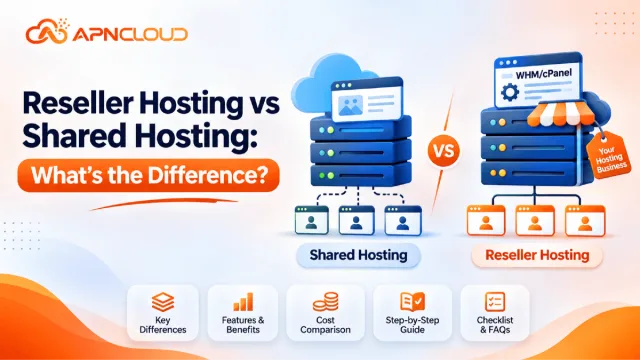
Reseller Hosting vs Shared Hosting: What's the Difference?
Learn the key differences between reseller hosting and shared hosting, including features, pricing, performance, and benefits. Discover which hosting solution is best for your website, web development agency, or hosting business with APNCloud.
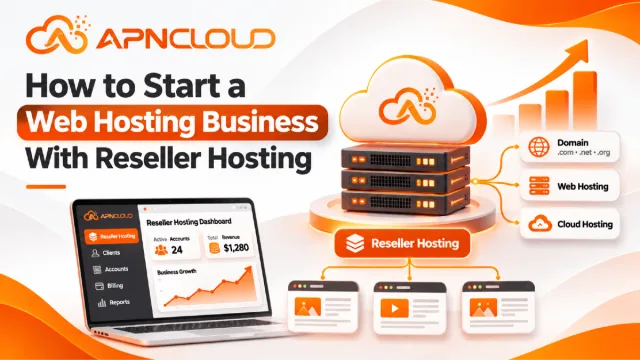
How to Start a Web Hosting Business With Reseller Hosting
Starting a web hosting business does not require owning expensive servers or building a data center. Reseller hosting allows entrepreneurs, freelancers, and web developers to sell hosting services under their own brand while using infrastructure managed by an established provider. This beginner-friendly guide explains how to choose reseller hosting, create hosting packages, set competitive prices, build a professional website, manage customers, avoid common mistakes, and grow a sustainable hosti

Best Reseller Hosting for Starting a Web Hosting Business
Starting a web hosting business does not always require expensive servers or advanced technical knowledge. The right reseller hosting solution lets entrepreneurs create hosting packages, manage customer accounts, establish their own brand, and build recurring revenue. This guide explains how to choose reliable reseller hosting, calculate costs, avoid common mistakes, and launch a sustainable hosting business.
Never miss a post
Fresh guides, product updates and hosting resources from the APNCloud team.